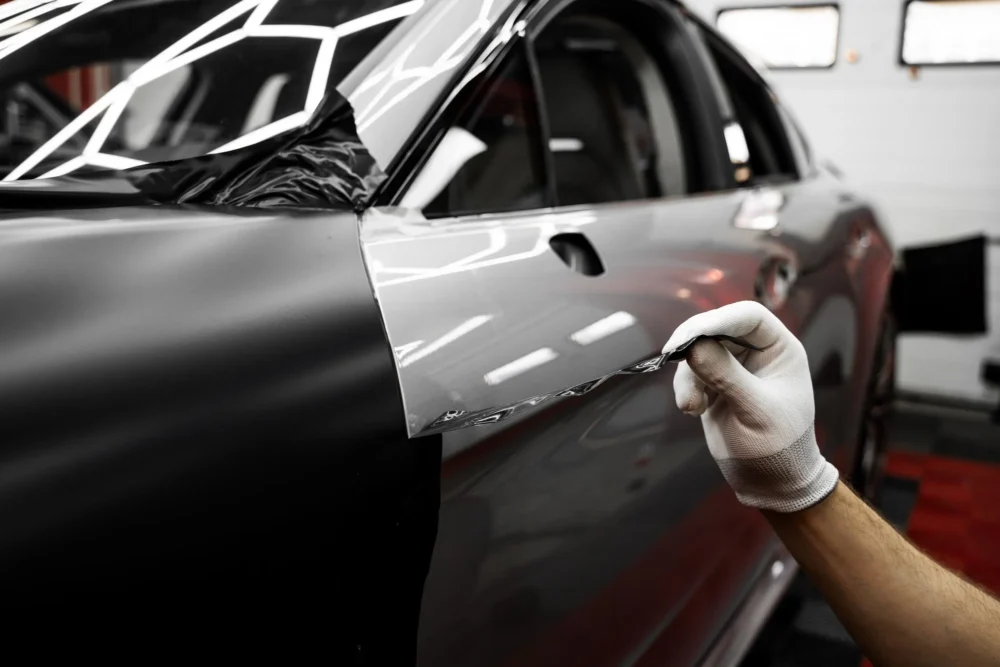
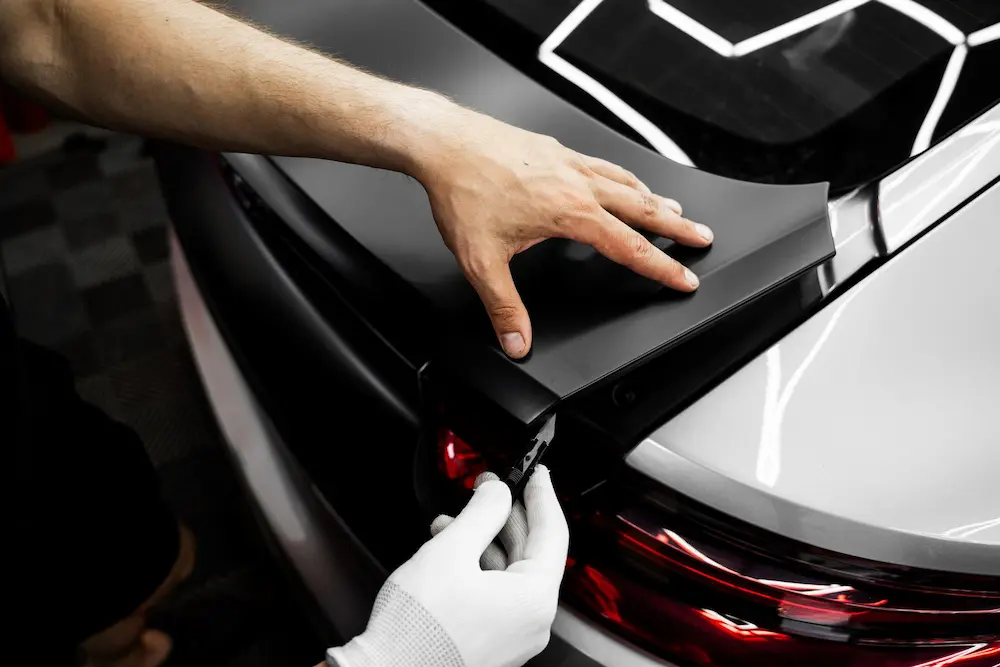
Arizona sun, dust and automatic car washes leave paint dull, swirled and hazed. Machine polishing takes it back to a clean, sharp reflection — and it is the right thing to do before any wrap or coating goes on.
Wrap film and ceramic coatings copy whatever is underneath them. Swirls, wash marks and oxidation do not disappear under vinyl — they show through it. That is why every correction job starts with a paint depth reading and a look under proper inspection light, so we polish what needs polishing and leave the rest of your clear coat alone.
One cutting-and-finishing step. Removes light swirls and wash marks and brings back most of the gloss. The usual call before a wrap goes on.
Two-stage correction
Compound to cut the defects out, then a finishing polish to clear the haze. Handles deeper scratches, oxidation and older, harder paint.
Detailing only
Interior and exterior clean with no machine work. Decontamination, wheels, glass, trim dressing and a proper interior reset.
what we fix
What Correction Removes
Paint depth is measured before any machine touches a panel.
01.
Swirl marks
The spiderweb pattern automatic washes leave behind
02.
Wash scratches
Light marring from sponges, towels and trapped grit
03.
Oxidation
Chalky, faded paint from years of Arizona UV
04.
Water spots
Hard water etching from sprinklers and hose-downs
05.
Bird and bug etch
Acid marks caught before they reach primer
06.
Holograms
Buffer trails left behind by someone else’s polisher
How a Correction Job Runs
Wash and decontamination — foam, hand wash, iron remover and clay
Paint depth readings — we measure clear coat before removing any of it
Test spot under light — one panel corrected first so you can see the result
Machine correction — compounding and polishing, panel by panel
Panel wipe — solvent wipe so nothing is hidden by polishing oils
Protection — sealant, ceramic coating, or straight into a wrap
A single-stage polish is usually a day. A full two-stage correction can run two to three.
why us
Why Correct Before You Wrap or Coat
Paint gauge readings — we never polish blind
Test spot first — you approve the result before the whole car
Proper inspection lighting — defects found, not guessed at
No filler glazes — what you see is corrected, not hidden
One shop — correction, coating and wrap on the same bench
Service Area
Car Wrap Studio is located at 5455 N 51st Ave, Glendale, AZ 85301. We serve drivers and businesses across the Phoenix metro, including Glendale, Phoenix, Peoria, Scottsdale, and surrounding communities.
Paint Correction FAQ
What is the difference between detailing and paint correction?
Detailing cleans. Correction removes. A detail gets the car spotless; correction physically levels a fraction of the clear coat so swirls and scratches are gone permanently.
Will correction damage my clear coat?
Not when it is measured. We take paint depth readings on every panel and stop well inside safe limits. Cars that have been machine-polished repeatedly sometimes have too little clear coat left, and we will tell you if that is the case rather than take the job.
Do I need correction before a wrap?
Usually a single-stage polish, yes. Vinyl follows the surface underneath, so heavy defects telegraph through the film, and contamination stops the adhesive gripping properly.
How long does it take?
A single-stage polish is typically one day. A two-stage correction on a large or badly marked vehicle can run two to three days.
How long do the results last?
The correction itself is permanent — those defects are gone. How long the finish stays that way depends on how the car is washed afterwards. Automatic brush washes put the swirls straight back.
Do you do interiors?
Yes. Full interior detailing including seats, carpets, trim and glass, either on its own or alongside exterior work.
Want to See What Your Paint Can Look Like?
Bring the car by for a look under proper light, or call 602-880-2163 for a quote.